Garage door safety sensors use an unseen beam to help stop the door from closing on people, pets, cars, or stored items. One sensor sends the beam, and the other receives it. If something blocks the beam or the sensors move out of line, the opener may stop, reverse, or refuse to close.
A door that will not close can leave a garage open and create a safety or security concern. Many sensor problems have simple causes, such as dust, a toy, or a small bump to the bracket. This guide explains what to check first and when professional help is the safer choice.
Table of Contents
- How do garage door safety sensors work?
- Why will my garage door not close?
- What do the garage door sensor lights mean?
- How do you clean garage door safety sensors?
- How do you realign garage door safety sensors?
- Can you bypass garage door safety sensors?
- When should you call a garage door repair professional?
- Key takeaways
- Frequently Asked Questions
- Conclusion
How do garage door safety sensors work?
Garage door safety sensors are small electronic parts near the bottom of the door tracks. They work as a pair. One sensor sends an invisible infrared beam, and the other sensor receives it. Infrared means light that people cannot see.
What each sensor does
One unit sends the beam. The other unit receives it. Both units must face each other across the garage opening and sit at almost the same height.
The sensors often attach to the vertical tracks or small brackets beside them. A bump from a bin, car, tool, or heavy box can move one sensor. Dust, cobwebs, and moisture can also affect the beam.
When the beam reaches the receiving sensor, the opener knows the opening is clear. The opener can then close the door during normal use. This part of garage door safety helps protect people, pets, and property below the door.
How the opener uses the sensor signal
The opener checks the sensor signal during each closing cycle. If the signal stops, the opener may stop the door or send it back up. This explains why a door may open normally but refuse to close.
The sensors do not cause every opener problem. A broken spring, bent track, weak motor, worn gear, or bad wall control can cause similar signs. A full check should look at the door and opener, not only the sensors.
Hot Springs Garage Door Repair can help homeowners tell a simple sensor issue from a larger door problem. A safe diagnosis matters because garage doors are heavy. Springs and cables can also hold strong stored force.
Why will my garage door not close?
A garage door may not close because an item blocks the beam, the sensors are out of line, or another opener fault is present. Start by checking the area near both sensors and the space under the door.
Blocked or interrupted sensor beams
Look for toys, tools, bins, leaves, or boxes near the bottom of the tracks. Even a small object can break the beam. Move the item away, then try the wall button while standing clear of the door.
Check both sensor faces for dust, spider webs, or water drops. Do not touch the door, springs, cables, or tracks during the test. If the door closes after the item is removed, the cause may have been a simple blockage.
A sensor wire can also become loose or damaged. It may be pinched, pulled from its terminal, or cut near the bracket. Electrical work inside the opener should be left to a trained garage door technician.
Other causes of stopping or reversing
A door can stop or reverse because its travel settings are wrong. A bent track or damaged roller can cause the same problem. A worn garage door spring may also stop the door from moving in a balanced way.
A door that feels heavy, moves unevenly, or makes a loud snap needs prompt care. These signs can point to a mechanical fault, not just a sensor issue. Do not keep pressing the button again and again.
Repeated attempts can strain the motor or make the fault worse. If the motor runs but the door does not move, garage door opener repair may be needed. Hot Springs Garage Door Repair can check the opener, door hardware, and sensor circuit together.
What do the garage door sensor lights mean?
The sensor lights can show whether each unit has power and whether the beam reaches the receiver. A steady light often means the sensor has power and is lined up. The exact light pattern depends on the opener brand and model.
Steady and flashing lights
Steady lights on both sensors often suggest that the beam is complete. If one light is dark, the unit may lack power or have a loose wire. The sensor itself may also have an internal fault.
If one light flashes, the sensor may be out of line. It may also be receiving an unstable beam. A loose bracket can shake when the door moves and change the signal.
Look at the lights while checking whether either bracket feels loose. Do not bend the track to fix a sensor. The track supports the door and may need separate repair.
What different light patterns can indicate
Light colors and patterns differ between opener brands. The owner manual gives the best meaning for a certain model. If the lights do not match the manual, the sensors may need cleaning, alignment, wiring repair, or replacement.
Common clues include:
- One dark light may point to a power or wire problem.
- One flashing light may point to poor alignment.
- Normal lights may appear even when another opener fault exists.
- Lights that change when a wire moves may point to a loose connection.
- A door that reverses with clear lights may have travel or resistance trouble.
The lights are useful clues, but they do not give a full diagnosis. A professional can test the beam and inspect the rest of the door system.
How do you clean garage door safety sensors?
Garage door safety sensors can often be cleaned with a soft, dry cloth. Turn off opener power first. Keep your fingers away from moving parts, and do not spray liquid on the sensors or wires.
Safe cleaning steps
Use this simple process:
- Close the door if it is safe, then disconnect opener power.
- Remove leaves, webs, and items from the sensor area.
- Wipe each sensor lens with a clean, soft, dry cloth.
- Check the brackets and wires for damage or loose parts.
- Restore power and test the door from a safe place.
The lens is the small clear part on the front of each sensor. Use light pressure when wiping it. A rough cloth can scratch the lens and make it harder to receive the beam.
After cleaning, watch the indicator lights. If both lights stay steady but the door will not close, another problem may be present. The opener may need testing, or a sensor may have an internal fault.
Common cleaning mistakes to avoid
Do not spray glass cleaner, oil, or water onto the sensor. Liquid may reach the wires or circuit board. Do not scrape the lens with a blade, key, or screwdriver.
Do not use cleaning as a reason to touch the springs, cables, rollers, or lift brackets. These parts can move without warning or hold stored force. Cleaning should only involve the sensor face and nearby space.
If a sensor stays dark after the opener has power, stop troubleshooting. Wiring or part testing may be needed. A garage door repair technician can find the fault without creating a new safety risk.
Regular Garage Door Maintenance can also help find loose brackets, dirty lenses, and worn parts before they cause a closing problem.
How do you realign garage door safety sensors?
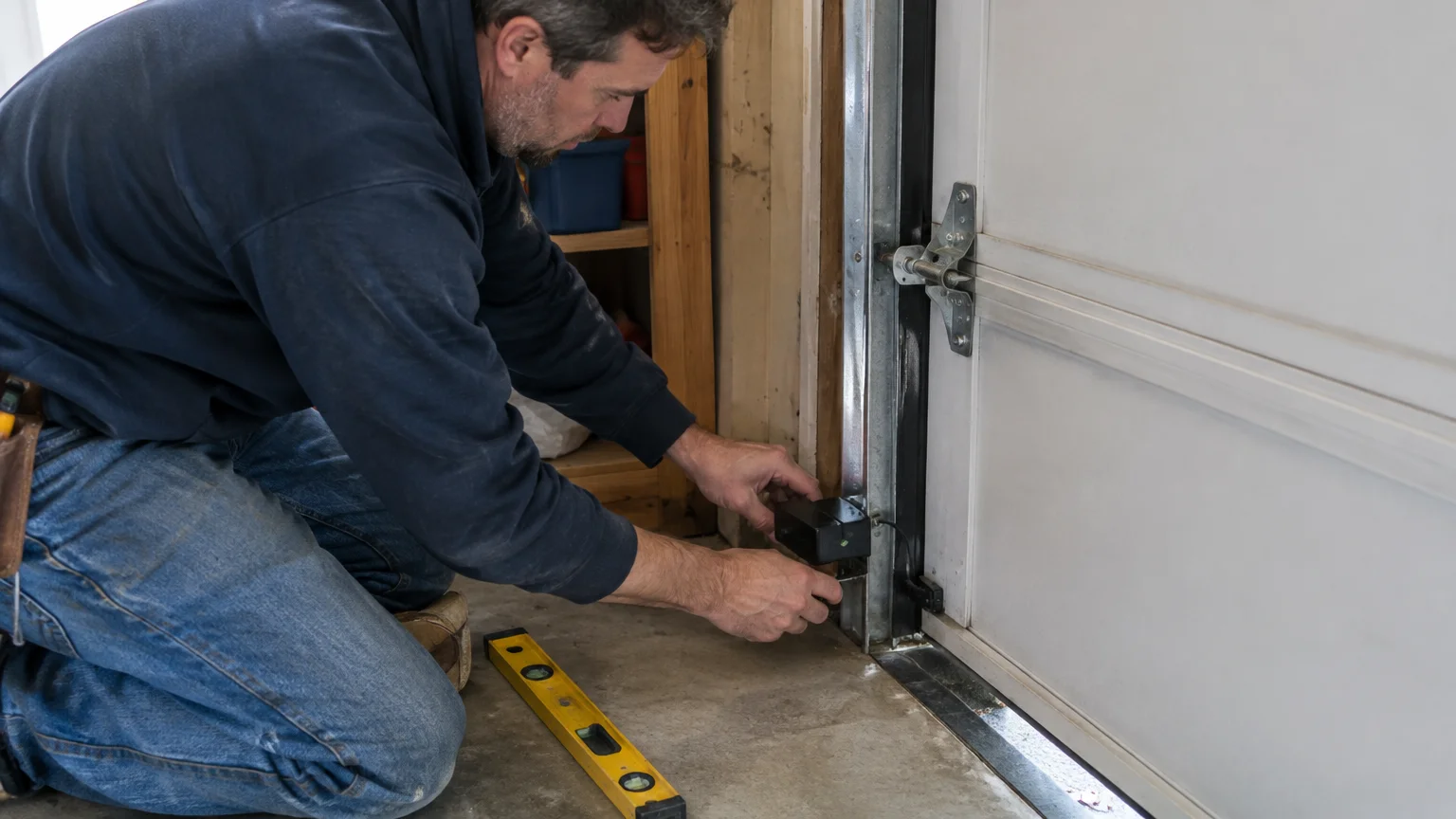
To realign garage door safety sensors, make sure both units face each other at the same height. They must also sit firmly on their brackets. Small changes may restore the beam, but test the door with care afterward.
Checking sensor position and alignment
First, look across the doorway from one sensor to the other. Both units should point straight across the opening. A sensor aimed at the floor, wall, or ceiling may not send the beam to its partner.
Check whether a bracket is bent, loose, or twisted. Tighten only the bracket fastener if it is clearly loose and safe to reach. Do not loosen track bolts or move the vertical track.
Use a level only if you can do so without placing your hands near moving parts. The sensors do not need perfect building-level placement. They only need to line up with each other and face across the opening.
Testing the door after adjustment
Restore power and test the door with the wall control. Keep children, pets, vehicles, and other people away from the opening. The door should move smoothly and respond without reversing for no clear reason.
A basic safety check can use a suitable object across the beam while the door is open. Keep the area clear and follow the opener manual. Never stand beneath a moving door. Testing steps can vary by model.
If the alignment changes again, the bracket may be bent or the track may move. That points to a mechanical problem rather than a simple sensor adjustment. Garage Door Off Track Repair or Garage Door Maintenance may be more suitable than repeated adjustments.
Can you bypass garage door safety sensors?
A homeowner should not bypass garage door safety sensors. Bypassing removes a safety feature that stops the door when something breaks the beam. It can allow the door to close on a person, pet, vehicle, or object.
Why bypassing the sensors is unsafe
Taping a sensor aside, joining wires, or holding the wall button can defeat part of the safety system. The door may then close without its usual beam check. A heavy door can cause serious injury or property damage.
A temporary workaround may also hide the real fault. The problem could be a broken wire, failed sensor, damaged bracket, or opener issue. Bypassing it can make later testing harder.
The safer choice is to leave the door open only when you can watch it and the opening is safe. If the door is stuck open, keep people and pets away until the system is repaired.
When sensor replacement or repair is needed
Replacement may be needed when a sensor stays dark, has a cracked lens, or fails after cleaning and alignment. Repair may be needed when the wire, bracket, or mounting point is damaged.
Some sensor parts work only with certain opener brands. The replacement must match the opener and wiring. A technician can check compatibility and test the safety response after installation.
Do not assume a new sensor will solve every closing problem. The opener, tracks, springs, rollers, and travel settings can all affect door movement. A full check helps prevent repeat failures.
When should you call a garage door repair professional?
Call a garage door repair professional when cleaning and a basic visual check do not solve the issue. Professional help is also needed when the door shows signs of a mechanical or electrical fault. Prompt care matters when the door is stuck open, unsafe, or hard to move.
Warning signs of an electrical or opener fault
Professional help is recommended when:
- The sensor lights stay dark after power and wire checks.
- The door reverses even when the beam path is clear.
- The opener hums, clicks, or runs without moving the door.
- The door is heavy, crooked, loud, or partly off its tracks.
- A spring, cable, roller, or bracket appears broken.
- The sensor position changes again after adjustment.
A broken spring or cable should not be treated as a sensor problem. These parts can release stored force. Garage Door Cable Repair, Garage Door Opener Repair, or Garage Door Installation may fit the problem found during the check.
What to expect from a safety sensor repair visit
A technician will review the symptoms and inspect both sensors. They may check the wires, test the opener response, and inspect the tracks, rollers, springs, cables, and door balance. These parts can all affect how the door closes.
The repair plan should explain what failed and what work is needed. The service depends on the opener model, sensor condition, access, and any related damage. Hot Springs Garage Door Repair serves homeowners, businesses, and property owners, including Morning Star, Euclid Heights, Hot Springs Village, Mountain Pine, Malvern, and Midway.
For urgent garage door opening repair, the technician may first secure the opening. The goal is to restore safe operation without bypassing the safety system. The right repair depends on the fault found.
Key takeaways
- Garage door safety sensors use an invisible beam to check the opening.
- Dust, objects, loose brackets, and damaged wires can break the signal.
- Steady lights often suggest alignment, but patterns vary by opener.
- Cleaning and careful alignment are reasonable first checks.
- Bypassing sensors is unsafe and may hide a larger repair problem.
Frequently Asked Questions
Why does my garage door open but not close?
A door may open but not close when its safety beam is blocked, dirty, or out of line. A loose wire, damaged sensor, or opener fault can cause the same sign. Check the sensor area without touching moving parts. If the lights stay abnormal or the door still reverses, professional testing is safer.
Should both garage door sensor lights be on?
Both sensor lights should usually show power and a stable beam when the units line up. The colors differ by opener brand. A dark or flashing light may point to alignment, wiring, or sensor trouble. The owner manual gives the best meaning for that model.
Can sunlight affect garage door sensors?
Strong sunlight can sometimes affect the receiving sensor. This is more likely when sunlight shines directly into its lens. A sensor hood or small position change may help, but the unit must still face its partner. If the problem continues, a technician should check the sensors and opener.
How often should garage door sensors be cleaned?
There is no set cleaning schedule for every garage. Check the lenses when the door will not close or when dust, webs, or moisture are visible. A soft, dry cloth is usually enough. Regular Garage Door Maintenance can also find loose brackets and damaged wires.
Who services garage doors near me?
A local garage door repair professional can service sensors, openers, tracks, springs, cables, and other door parts. Hot Springs Garage Door Repair helps property owners and nearby communities assess doors that stop, reverse, or will not close.
Conclusion
Garage door safety sensors are small, but they play a major part in safe closing. A blocked beam, dirty lens, or shifted bracket may be easy to correct. A dark light, damaged wire, heavy door, or repeated reversal needs more care.
Never bypass the sensors to force the door shut. Keep people and pets clear, avoid springs and cables, and seek help when a simple cleaning or visual check does not solve the issue. For urgent garage door repair in Hot Springs, Contact us today to arrange a safe inspection and repair.
If you are not sure what you are dealing with, it is worth having someone look at it before it turns into a bigger job. Get in touch with Hot Springs Garage Door Repair today and we will tell you where you stand.